Unmasked: The Power of Speaking Our Truth
Hello, lovely readers — In this blog The Clarity Coach touches on power of speaking our truth – where honesty meets courage – and silence loses its power. Many of us walk around wearing masks, masks that often hold us back because we are afraid…
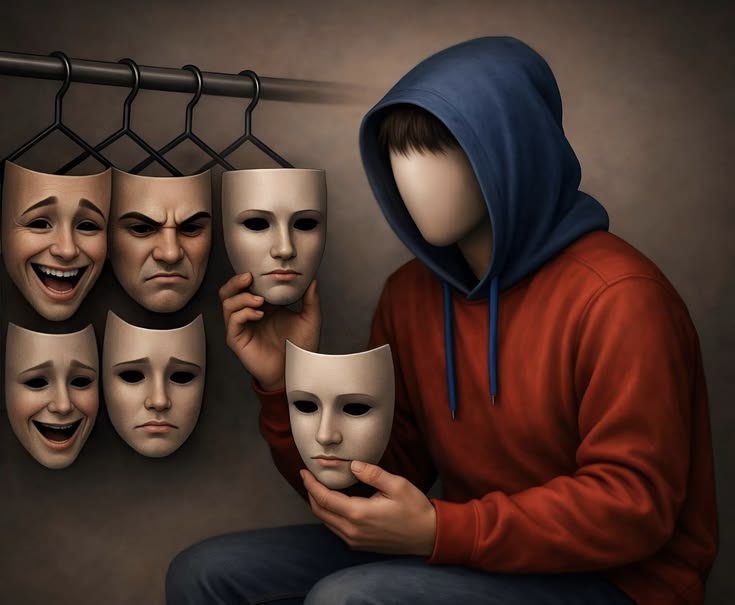
How many of us are walking around wearing a mask?
Not the kind you can see.
Not the kind you take off at the end of the day.
But the invisible one.
The “I’m fine” mask.
The “I’ve got it all together” mask.
The “Don’t ask me what’s really going on” mask.
We wear them at school. At work. At home. On social media. Even in friendships. Sometimes even with ourselves.
And yet behind so many of those masks are stories of anxiety, abuse, shame, grief, body image struggles, suicidal thoughts, neurodiversity challenges, loneliness, and fear of being judged.
This is why Unmasked: The Power of Speaking Our Truth matters.
Because silence protects stigma.
And honesty creates change.
The Mask We Learn to Wear
From a young age, many of us are taught — directly or indirectly — that certain things are not to be talked about:
- “Don’t air your dirty laundry.”
- “Be strong.”
- “Stop being dramatic.”
- “Other people have it worse.”
- “Just get on with it.”
So we learn to minimise our pain.
We learn to smile when we’re struggling.
We learn to perform instead of feel.
For young people especially, the pressure can feel overwhelming. Social media amplifies comparison. Academic expectations build stress. Identity questions feel isolating.
According to the World Health Organization, suicide is one of the leading causes of death among young people globally. That is not because young people are weak. It is because too many are suffering in silence.
Silence is heavy.
Silence is exhausting.
Silence can be dangerous.
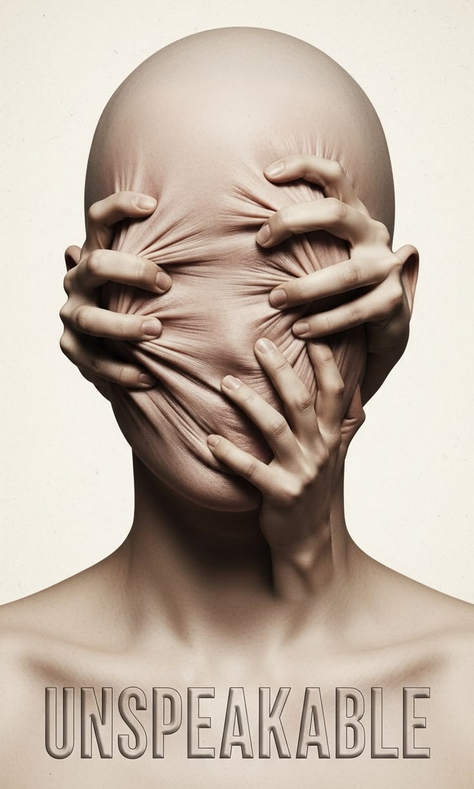
Pain Behind the Smile: Real Scenarios We Don’t Always See
- The High Achiever Hiding Abuse
On the outside, she looks confident. High grades. Polite. Involved in extracurricular activities.
At home, she’s experiencing emotional abuse. She has been told repeatedly she’s “not good enough.” She believes it.
She doesn’t speak up because:
- She fears not being believed.
- She feels shame.
- She doesn’t want to “cause trouble.”
The mask says: “I’m coping.”
The truth says: “I’m hurting.”
Research from the National Society for the Prevention of Cruelty to Children shows that many children who experience abuse do not disclose it immediately — sometimes not for years — due to fear, guilt, or confusion.
- The Boy Who Thinks He Must Be Strong
He’s been taught that crying makes him weak. That talking about emotions is “soft.” So he suppresses everything — anger, sadness, fear.
When his mental health declines, he doesn’t reach out.
According to Samaritans, men are significantly more likely to die by suicide than women in the UK. One major factor? Social expectations around masculinity and emotional expression.
The mask says: “I’m fine.”
The truth says: “I don’t know how to ask for help.”
- The Teen Struggling With Body Image
She scrolls through edited images daily. She compares. She criticises. She hides parts of herself in oversized clothes. She avoids photos.
Body image struggles are deeply linked to anxiety, depression, and eating disorders. Research from Mental Health Foundation highlights how social media and appearance pressures significantly impact young people’s mental health.
The mask says: “I don’t care.”
The truth says: “I hate what I see.”
- The Neurodiverse Child Trying to “Fit In”
A young person with ADHD or autism learns early that their natural way of being isn’t always accepted.
So they “mask.”
They copy behaviours. They suppress stimming. They force eye contact. They overcompensate socially. It is exhausting.
Research linked to National Autistic Society highlights how prolonged masking in autistic individuals can lead to burnout, anxiety, and identity confusion.
The mask says: “I’ll just try harder.”
The truth says: “I’m tired of pretending.”
Why Do We Stay Silent?
Because speaking our truth feels risky.
We fear:
- Rejection
- Being misunderstood
- Being labelled
- Being judged
- Being dismissed
- Losing relationships
- Being seen as “too much”
But here is the deeper truth:
The cost of silence is often greater than the risk of honesty.
Psychologist Brené Brown reminds us:
“Shame cannot survive being spoken.”
When we speak, we interrupt stigma.
When we share, we give others permission to do the same.
When we open up, we realise we are not alone.
The Stigma That Still Exists
Despite growing awareness, mental health is still surrounded by taboos:
- Abuse survivors are being asked, “Why didn’t you leave?”
- Suicide is being whispered about rather than openly addressed.
- Eating disorders are dismissed as “attention-seeking.”
- Neurodivergent children are labelled as “naughty” or “lazy.”
- Anxiety is trivialised as “overthinking.”
Stigma thrives in misunderstanding.
And misunderstanding thrives in silence.
That is why Unmasked: The Power of Speaking Our Truth – Where Honesty Meets Courage – And Silence Loses Its Power is more than just an event.
It is a movement.
Why This Conversation Must Happen — Especially for Young People
Young people are watching us.
They are learning from how we:
- Talk about mental health
- Respond to vulnerability
- Handle difficult conversations
- Express emotion
If we model masks, they will wear them too.
If we model courage, they will learn courage.
According to YoungMinds, many young people delay seeking help because they worry about being judged or not taken seriously.
Imagine what could change if:
- Classrooms were safe spaces for honest conversations.
- Homes welcomed difficult truths without punishment.
- Communities replaced judgement with curiosity.
- Leaders spoke openly about their own struggles.
That is culture change.
That is generational healing.
Speaking Our Truth: What It Really Means
Speaking our truth does not mean oversharing everything with everyone.
It means:
- Acknowledging our reality.
- Owning our story.
- Saying, “This happened.”
- Saying, “This is hard.”
- Saying, “I need support.”
- Saying, “This is who I am.”
It means removing the mask — not all at once — but layer by layer.
It means recognising that vulnerability is not weakness. It is strength in its rawest form.
As Brené Brown also says:
“Vulnerability sounds like truth and feels like courage.”
The Power of Unmasking
When one person speaks honestly in a room, something shifts.
You see shoulders drop.
You see tears held back finally fall.
You see silent nods.
You see recognition.
You see connection.
At Unmasked, we are creating that space.
A space where:
- Survivors are heard without blame.
- Young people feel validated.
- Conversations about suicide are handled with care and compassion.
- Body image struggles are understood beyond appearance.
- Neurodiversity is celebrated, not hidden.
- Silence no longer dominates the room.
Because when honesty meets courage, something powerful happens:
Shame loses its grip.
Fear loses its power.
And healing begins.
Final Reflection
What’s Really Holding You Back?
✨ Are you waiting for more time, more motivation, more confidence… ?
✨ What could you start today that your future self will thank you for?
The mask may feel protective.
But it is also isolating.
And here is the truth:
You are not the only one behind a mask.
You are not the only one afraid.
You are not the only one struggling.
The bravest thing you may ever do is say, “This is my truth.”
And when you do — you make it safer for someone else to do the same.
Let’s talk.
Let’s unmask.
Let’s change the narrative — together.
Because silence only wins when we stay quiet.
And we are done staying quiet.
All I ask is, choose YOU! What mask are you going to unmask today?
How Coaching Can Help: What & Why
As The Clarity Coach, my work supports individuals who:
- Feel overwhelmed or emotionally exhausted
- Struggle with guilt around rest or boundaries
- Identify strongly as “selfless” but feel depleted
What I Support Clients With:
- Recognising over-giving patterns
- Reframing unhelpful beliefs about self-worth
- Building emotional regulation tools
- Developing values-led boundaries
- Reducing stress and preventing burnout
Why Coaching Is Effective:
Many people understand what they should do — but feel unable to change without guilt.
Coaching provides:
- A safe, reflective space
- Practical, evidence-based tools
- Gentle accountability
- Sustainable behaviour change
Selfless selfishness isn’t about becoming less caring.
It’s about ensuring your care doesn’t cost you your wellbeing.
Work With Me – The Clarity Coach
Supporting children, young people and adults to build resilience, manage stress and anxiety, and thrive emotionally doesn’t have to feel overwhelming. With the right guidance, small changes can have a big impact.
As The Clarity Coach, I work with children, families, schools, buisness owners and organisations to provide practical strategies, tailored coaching, and safe spaces for growth.
✨ If you’d like support in helping your child (or your school community) manage stress and anxiety more effectively, let’s connect. Together, we can give young people the tools they need to navigate challenges with confidence and clarity.
📩 Get in touch today to explore how I can support you. Click here to book a call
Author: Zeenat Noorani – The Clarity Coach | Co-founder & Director, Let’s Talk Better CIC
Clarity, Creates, Confidence & Courage. Conversations that matter ~ One Talk at a time ~