Nurturing Your Mind & Body: Embracing Self-Care for Children, Young People & Adults
Hello, lovely readers — A heartfelt guide from me The Clarity Coach
Every year, during Self‑Care Week — this year running from 17th to 23rd November 2025 — we shine a spotlight on the importance of taking time out, recharging, reflecting and supporting our overall wellbeing. The theme for 2025 is Mind & Body, with an emphasis on positive lifestyle choices and the wide-ranging benefits of physical activity and movement. But let’s be clear: self-care isn’t something we switch on for a week and then forget about. It’s a lifestyle intention, one that flows through every season of life and supports children, young people and adults alike.
Whether you’re a child learning your first self-care routines, a teenager navigating transitions and pressures, or an adult juggling demands and responsibilities — this article is for you. I’ll walk you through what self-care really means, why it matters, how it benefits all ages, and top-tips you can start using now(yes, today) to embed it into daily life.
What is Self-Care – and Why It Matters
Self-care is more than a bubble bath or a day off (although those can help!). At its heart, it’s about listening to our mind and body, and acting with kindness, intention and consistency to maintain health and wellbeing. For young people, this means building habits early that support resilience. For adults, it means keeping the tanks topped up so we can show up fully for ourselves and others.
Research shows that self-care has a solid foundation in mental-health literature: for example, a systematic review found that self-care for adolescents can be defined as an individual process of self-awareness, self-compassion and using specific strategies to work toward emotional/mental balance. (PMC)
Importantly, self-care is preventive, not just reactive. With increasing prevalence of mental health challenges among children, young people and adults in the UK, the need to build self-care routines has never been greater. For instance:
- In England 2022 data found 18 % of children aged 7-16 years and 22 % of young people aged 17-24 years had a probable mental disorder. (NHS England Digital)
- In 2023 the follow-up reported that about 1 in 5 children and young people aged 8-25 had a probable mental disorder (20.3 % of 8-16-year-olds; 23.3 % of 17-19-year-olds; 21.7 % of 20-25-year-olds). (NHS England Digital)
- Over 500 children a day in England are being referred to mental health services for anxiety — more than double the rate before the pandemic. (childrenscommissioner.gov.uk)
These statistics underscore that we cannot wait for crisis before practicing self-care. Building habits now supports wellbeing, performance, relationships and life satisfaction.
The Wide-Ranging Benefits of Self-Care
When children, young people and adults engage in regular, intentional self-care, there are profound benefits — mind, body and soul. Here’s how these benefits appear across age groups:
For children (ages 7-11):
- Builds emotional awareness and vocabulary: they learn to recognise when they feel stressed, worried, excited or tired, and practice soothing or activating strategies.
- Supports social confidence: feeling physically well (good sleep, movement, nutrition) helps children engage better in school, friendships and transitions.
- Prevents escalation: early habits mean fewer chances of difficulties building up into bigger issues later.
For young people / teenagers (ages 12-18):
- Regulates mood and stress: during major changes (exams, friendships, identity, online pressures), self-care helps maintain equilibrium.
- Supports physical health and mental health links: the ‘Mind & Body’ focus means movement, rest, nutrition, and screen-time awareness become part of self-care.
- Builds autonomy & resilience: young people take ownership of their wellbeing — a skill for life.
For adults:
- Prevents burnout and aids recovery: whether you’re parenting, working, studying or combining roles, self-care helps replenish mental and physical energy.
- Enhances relationships and performance: when you’re well-looked after, you bring more of yourself to work, home and community.
- Supports mental health maintenance: for those with past trauma or ongoing vulnerabilities, regular self-care supports long-term stability.
From strengthening the body to supporting emotional resilience, self-care truly connects mind & body.
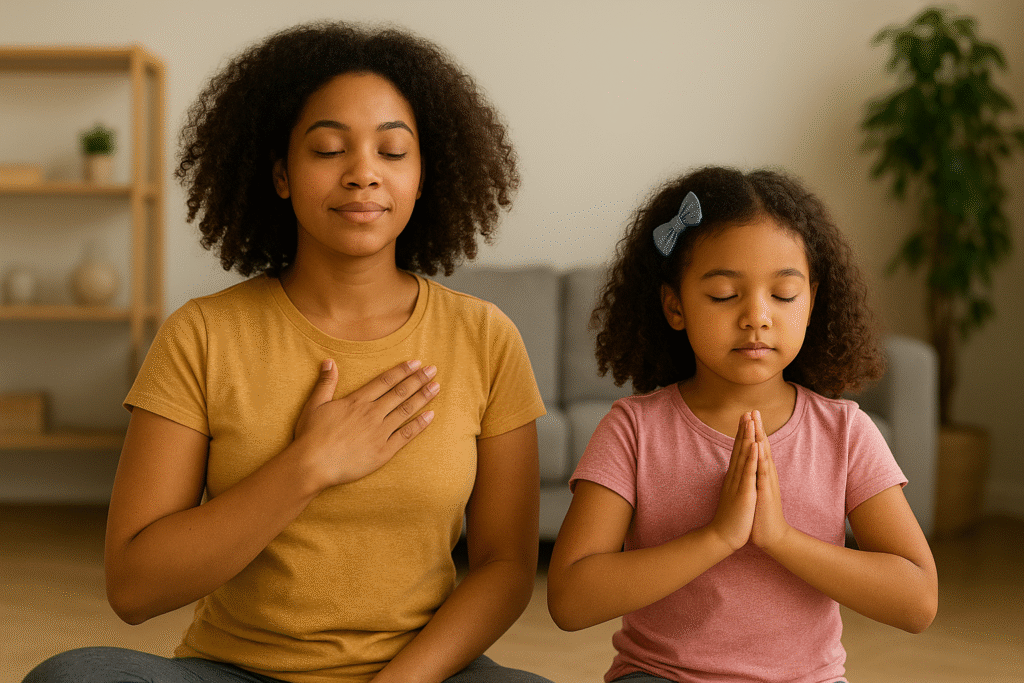
Top-Tips: What Self-Care Looks Like & How to Do It
Here are practical, age-relevant tips for embedding self-care. These suggestions are adaptable — pick what fits you, your child or your context, and build from there.
1. Build the Basics: Sleep · Nutrition · Movement
- Sleep: For children and young people, aim for a consistent bedtime routine. Adults also benefit from winding down, switching off screens and prioritising sleep hygiene.
- Nutrition: Encourage regular, balanced meals. For younger ones, involve them in choosing/ preparing healthier options; for teens/adults, keep it simple, regular and nourishing.
- Movement: Aligning with this year’s Self-Care Week theme (Mind & Body) — movement doesn’t mean ‘gym-intense’. It could be a dance, a walk, yoga, kickabout in the park, or stretching out after sitting for a long. For children, make it playful; for teens/adults, make it purposeful yet fun.
2. Quiet Time & Reflection
- Children: Introduce short “checking in” times: ask “How are my worries today?” “What has been good today?” Use simple age-appropriate language.
- Young people: Encourage journaling, audio notes, drawing — however they like to reflect. Schedule 5-10 minutes daily or every other day.
- Adults: Commit to a “me” moment: whether a short meditation, breathing exercise, or simply a pause before the evening. Reflection helps you recognise patterns, needs and triggers.
3. Movement for the Mind – Engage, Create, Connect
- Children & Teens: Encourage activities that combine movement and expression: dance, sport, nature walks, active games. This supports mood, self-esteem and body-mind connection.
- Adults: Find what you love – walking meetings, yoga, strength training, social sport or simply taking the stairs. The key: pick something you’ll stick with and enjoy.
- Movement isn’t just physical — it uplifts mood, improves sleep, reduces anxiety and fosters connection between mind and body.
4. Digital & Screen-Time Awareness
- For children and teens: set boundaries around screen use, encourage real-world play, ensure downtime without devices. Excessive screen time, especially without breaks or movement, links to poorer wellbeing.
- For adults: schedule digital detox windows, replace some screen time with movement or reflection, use devices intentionally (rather than habitually). The evidence shows rising levels of problematic social media usage among adolescents (11 % in 2022 in Europe) and negative links with wellbeing. (World Health Organization)
5. Build Supportive Routines & Environments
- Children: Create simple routines: morning check-in, after-school unwind, bedtime reflection. Use visuals, fun prompts, and keep it light.
- Young people: Encourage involvement in planning their own routine. Support them to identify what works (e.g., movement, connection, creative time) and schedule it.
- Adults: Audit your week: where are the gaps? Where are the drains? Insert “non-negotiable” self-care slots — e.g., 30 mins walk, half-hour reading, weekly connection with a friend.
- Making the physical environment supportive helps: e.g., a tidy space for reflection, movement, or sleep; limiting distractions; having a “pause” corner.
6. Connection, Creativity & Kindness
- Connection: Encourage children and young people to talk about how they feel, build friendships, play with others, express themselves. For adults, foster connection with friends, family or community. Being seen, heard and supported is self-care.
- Creativity: Whether it’s art, crafts, music, writing, gaming, nature — creative expression is a powerful self-care tool for all ages. Your podcast and your work with children already emphasise this brilliantly!
- Kindness: Encourage kindness to self and others. For children: simple acts of kindness, reflection on “How did I help someone today?” For adults: practise self-compassion. Self-care is not selfish — it enables strength and service.
7. Tailor It & Review It
- Recognise that each person’s self-care journey is unique (as research shows). (PMC)
- Schedule regular check-ins: What’s working? What’s not? For children, you might chat at bedtime; for teens, maybe a weekly catch-up; for adults, a monthly “self-care review”.
- Change it up: as life evolves (school changes, job changes, family changes), your self-care needs will too. Be flexible.
Self-Care Week: A Launchpad, Not the Finish-Line
This year’s Self-Care Week (17-23 November) gives us a focused window to pause, reflect and embed good habits. The theme “Mind & Body” is perfect — reminding us that our mental and physical wellbeing are intertwined. But remember this is a starting point, not a one-off.
Use this week to begin or refresh your routines. Launch a family “movement challenge”, introduce a nightly check-in, try a short creativity slot, and schedule a 10-minute walk. And then carry forward — spread that practice across the year. For children and young people, routine is especially powerful; for adults, consistency builds resilience.
When to Seek Extra Support
Self-care is vital, but it isn’t a substitute for professional help when needed. If you or someone you care for is experiencing persistent low mood, anxiety, sleep issues, self-harm thoughts, or loss of interest, then please reach out. In the UK, you can contact:
- Samaritans: 116 123 (24/7, free)
- Mind Infoline: 0300 123 3393
- For children & young people, check local Child and Adolescent Mental Health Services (CAMHS) referral routes, or talk to your GP or school/university wellbeing team.
- If there is an immediate crisis, call 999 or go to your nearest A&E.

Final Thoughts: A Journey of Empowerment
As The Clarity Coach — with a passion for supporting children, young people and adults through wellbeing, mindset and transition — I invite you to view self-care not as a “nice-to-have”, but as essential. It’s a daily practice, a foundation for flourishing, a way to honour yourself and those you support.
Whether you’re introducing a 7-year-old to a bedtime reflection, supporting a young person to move and breathe and create, or carving out half an hour for yourself, you are strengthening mind and body, building resilience, and making wellbeing a lived reality.
Let this Self-Care Week be your launchpad. Let the real work continue all year long. Let’s nurture our bodies, calm our minds, connect from our hearts — and support children, young people and adults alike in thriving.
With warmth and clarity.
Work With Me – The Clarity Coach
Supporting children and young people to build resilience, manage stress and anxiety, and thrive emotionally doesn’t have to feel overwhelming. With the right guidance, small changes can have a big impact.
As The Clarity Coach, I work with children, families, and schools to provide practical strategies, tailored coaching, and safe spaces for growth.
✨ If you’d like support in helping your child (or your school community) manage stress and anxiety more effectively, let’s connect. Together, we can give young people the tools they need to navigate challenges with confidence and clarity.
📩 Get in touch today to explore how I can support you. Click here to book a call
Author: Zeenat Noorani – The Clarity Coach | Co-founder & Director, Let’s Talk Better CIC
Clarity, Creates, Confidence & Courage. Conversations that matter ~ One Talk at a time ~

Designed and Maintained by NewGence Web Design Solutions